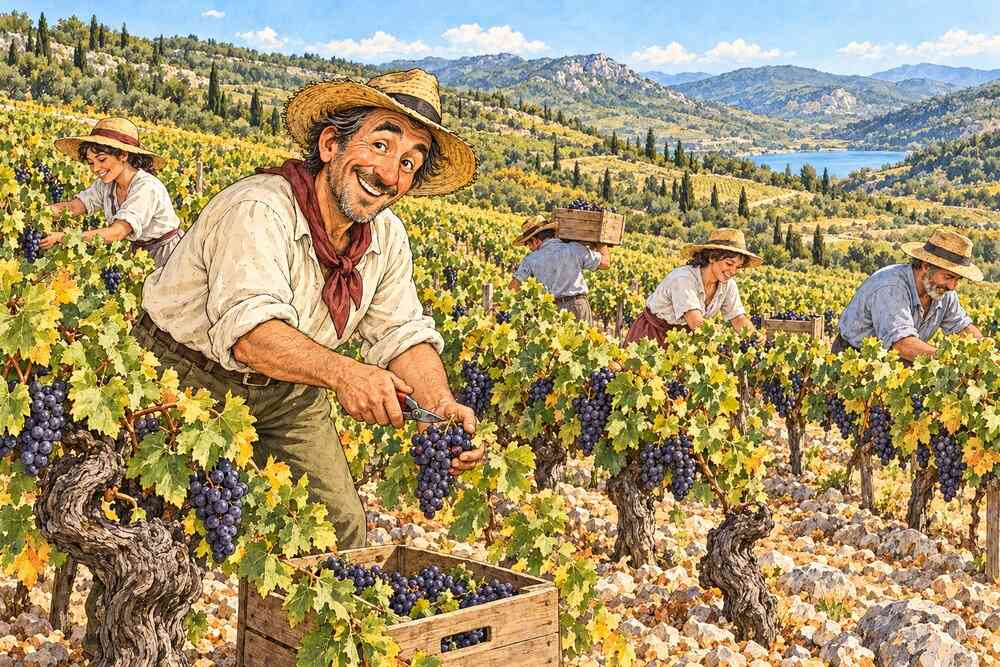
The terroir extends beyond the village roofs
Caramany also names a wine-growing area extending across three municipalities: Caramany, Cassagnes and Bélesta. To understand this Roussillon terroir, look beyond the village to the surrounding slopes.
Vins du Roussillon gives an average altitude of 250 metres and soils of gneiss and granite. These are broad guidelines: they do not mean every plot lies at the same height or has identical terrain.
The rock beneath the rows of vines
Slopes and stony ground are prominent features of the vineyards described by the municipality. From accessible paths, observe where the plots lie, their orientation and how rows occupy the ground. The landscape becomes easier to read when you dwell on these details.
“Terroir” has a concrete meaning here: soil, exposure, terrain and cultivation choices. Rock is one part of it, but cannot by itself tell the whole story of the work in a vineyard.
Discover grape varieties on the vine
Grenache Noir, Carignan Noir, Syrah and Lledoner Pelut appear in the list of authorised grape varieties published by the wine trade body for Caramany. This list sets out the appellation's framework; it does not describe the planting of every plot.
When talking to a winemaker, start with what you see: which variety grows here? How long have these vines been planted? How does the terrain affect the work? These questions introduce the vineyards through the grower's practices and experience.
A collective history written in the hills
Vines have not always held their current place in Caramany's landscape. The municipality's history records their gradual replacement of cereals and olive trees during agricultural expansion in the 18th and 19th centuries.
The cooperative winery's construction in 1923 marked another stage: a shared facility for the winemakers. This collective dimension helps explain the link between cultivated land and village life. Today's photographed slopes are also the result of that history.
Take time to look, leave room for work
To explore the vineyards, choose a route open to the public and keep farm access clear. A plot remains a workplace: ask the grower's permission before entering, photographing people close up or picking grapes.
Would you like to combine your walk with meeting a winemaker? Contact the winery about visitor options. You can also consult our ideas for walks around Caramany and the landscapes to discover before planning your route.